
A new deck is one of the best ways to add usable outdoor living space to your home. Whether you want a comfortable place to relax, an area for outdoor dining, or a larger space for entertaining family and friends, a professionally built deck can make your backyard more functional and enjoyable.
But before starting a project, most homeowners have one important question: How much does it cost to build a deck in Pennsylvania?
The answer depends on several factors, including the size of the deck, the materials you choose, the height and design, and the amount of preparation required. A simple ground-level pressure-treated wood deck will generally cost less than a large, elevated composite deck with stairs and custom railings.
In this guide, we’ll explain the major factors that influence deck construction costs and what Pennsylvania homeowners should consider when planning a new deck.
What Is the Average Cost to Build a Deck in Pennsylvania?
There isn’t one price that applies to every deck project. Two homes with similar backyard spaces can have very different construction costs depending on the design, materials, elevation, and features.
Some of the biggest factors include:
- Deck size: Larger decks require more materials, labor, and structural support.
- Decking material: Pressure-treated wood, composite, and PVC decking have different material costs.
- Deck height: Elevated decks may require additional framing, support posts, stairs, and railings.
- Design complexity: Multi-level layouts, angled edges, built-in features, and custom designs can increase costs.
- Site conditions: Sloped yards, limited access, landscaping, and existing structures can affect preparation and installation.
- Permits and code requirements: Applicable local requirements can influence the project scope and overall budget.
The best way to determine the cost of your project is to have the proposed deck evaluated and receive an estimate based on your home’s layout and your goals.
1. Deck Size and Layout
The overall size of your deck is one of the most significant factors affecting the cost.
A smaller deck designed for a couple of chairs and a grill requires fewer materials than a large outdoor living area with room for dining, seating, and entertaining.
When deciding on the right size, consider how you plan to use the space.
For example:
- Small decks: A practical space for a grill, a few chairs, and easy backyard access.
- Medium-sized decks: Room for outdoor dining, seating, and entertaining.
- Large decks: More flexibility for separate dining and lounging areas, outdoor furniture, and larger gatherings.
It is also important to think about how the deck connects to your home, yard, and existing landscaping. A well-planned layout can make even a modest-sized deck feel spacious and comfortable.
2. Choosing the Right Decking Material
The material you select has a major impact on the initial cost of your deck, as well as its long-term maintenance requirements.
The most common options for Pennsylvania homeowners include pressure-treated wood, composite decking, and PVC decking.
Pressure-Treated Wood Decking
Pressure-treated wood is a popular option for homeowners who want a traditional wood deck at a generally lower initial material cost.
Benefits include:
- Typically lower upfront material costs than composite or PVC.
- Traditional wood appearance.
- Can be stained or painted.
- A familiar and versatile decking option.
Wood decks do require ongoing maintenance. Cleaning, staining, sealing, and periodic inspections can help protect the surface from moisture, weather, and normal wear.
Composite Decking
Composite decking is made from a combination of wood fibers and recycled or synthetic materials. It offers the appearance of wood without many of the maintenance requirements associated with traditional lumber.
Benefits include:
- Lower routine maintenance requirements.
- No regular staining or sealing.
- Available in a variety of colors and finishes.
- Resistant to many common sources of weather-related wear.
Composite decking generally has a higher initial material cost than pressure-treated wood, but many homeowners appreciate the convenience and appearance over the long term.
PVC and AZEK Decking
PVC decking is another low-maintenance option. Unlike traditional wood-plastic composite decking, PVC decking is made primarily from synthetic materials.
Benefits include:
- Low maintenance.
- No regular staining or sealing.
- Strong resistance to moisture.
- Multiple colors and styles.
- A clean, finished appearance.
PVC and AZEK decking products can be a good choice for homeowners who want a premium outdoor living space with minimal routine maintenance.
Which material is best?
It depends on your budget, appearance preferences, and willingness to maintain the deck. Pressure-treated wood can be a practical choice for homeowners focused on initial cost, while composite and PVC decking may appeal to those who prioritize long-term convenience.
3. Ground-Level vs. Elevated Deck Construction
The height of your deck can significantly affect the construction process and overall cost.
Ground-Level Decks
Ground-level decks are built relatively close to the ground and are often simpler in design. Depending on the property and applicable requirements, they may require less structural support and fewer stairs or railings.
They are a popular option for homes with accessible backyards and relatively level terrain.
Elevated Decks
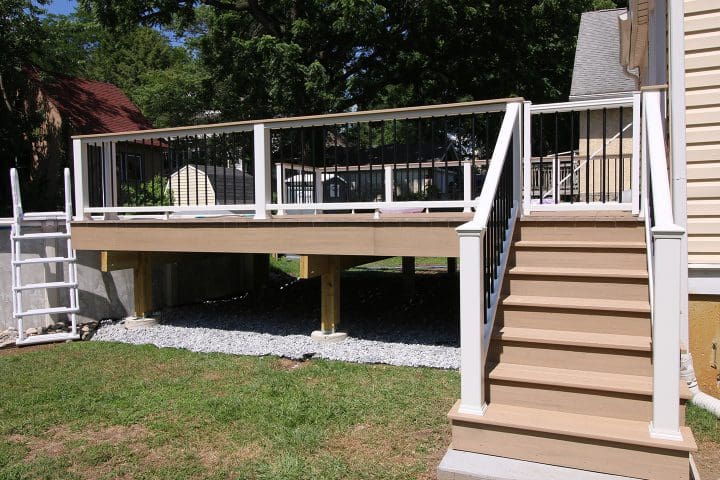
Elevated decks are commonly built for homes with raised foundations, walkout basements, or sloping backyards.
Because they sit higher above the ground, they typically require additional structural components, such as:
- Support posts and footings.
- Structural framing and beams.
- Staircases and landings.
- Guardrails and handrails.
- Additional planning for access and safety.
An elevated deck may cost more to construct, but it can also provide valuable outdoor space and improve access to your backyard.
4. Deck Railings, Stairs, and Additional Features
The decking surface is only one part of the overall project. Other features can influence the final cost.
Railings: Wood, composite, aluminum, and other railing systems are available. Material selection and the total length of railing required will affect the budget.
Stairs: The number of steps, width, location, and design of the staircase all contribute to construction requirements.
Multiple levels: A multi-level deck can create separate areas for dining, relaxing, and entertaining, but requires additional design and construction.
Custom layouts: Angled corners, unique shapes, and features designed around existing landscaping can add complexity.
Privacy features: Privacy screens and other additions can make an outdoor space more comfortable, depending on the home’s layout and local requirements.
When planning your deck, consider these features early. Incorporating them into the original design is generally easier than adding them after construction.
5. Existing Deck Removal and Site Preparation
If you are replacing an older deck, the condition of the existing structure can affect the project.
Some homeowners need the old deck completely removed before construction can begin. Others may have landscaping, uneven ground, or access limitations that require additional preparation.
Potential considerations include:
- Removal and disposal of an existing deck.
- Inspection of the area where the new deck will be constructed.
- Adjustments for sloped or uneven ground.
- Access for materials and construction equipment.
- Protection of existing landscaping and property features.
These details are important when developing an accurate estimate.
6. Do You Need a Permit to Build a Deck in Pennsylvania?
Many deck construction projects require a building permit, although requirements can vary depending on the municipality, deck height, size, attachment to the home, and other project details.
Pennsylvania homeowners should check with their local building or code enforcement office before beginning construction.
Permit requirements may include submitting plans, providing structural details, and arranging inspections during or after construction.
A qualified deck contractor can help homeowners understand which project details may need to be addressed before construction begins. Always confirm the applicable requirements with the local municipality.
7. Is Composite Decking Worth the Additional Investment?
For many homeowners, composite or PVC decking is worth considering even when the initial material cost is higher.
Traditional wood decks require periodic maintenance to help preserve their appearance and protect them from the elements. Composite and PVC products generally require less routine upkeep.
When comparing materials, consider more than the initial construction price.
Think about:
- How much maintenance you are willing to perform.
- How long you plan to enjoy the deck.
- Your preferred appearance and color.
- Your overall project budget.
- The manufacturer’s product and warranty information.
The right choice is the material that fits your home, lifestyle, and long-term expectations.
8. How to Get an Accurate Deck Construction Estimate
Before requesting an estimate, it helps to have a general idea of what you want.
Consider the following questions:
- How large would you like your deck to be?
- Will it be ground-level or elevated?
- Do you prefer pressure-treated wood, composite, or PVC decking?
- Will you need stairs and railings?
- Do you want additional features such as privacy screens or multiple levels?
- Are you replacing an existing deck or building a completely new one?
You don’t need to have every detail figured out. An experienced deck builder can help you evaluate the space, discuss material options, and determine what makes sense for your property.
A detailed estimate should account for the proposed design, materials, structural requirements, site conditions, and any additional work needed to complete the project.
Build the Right Deck for Your Pennsylvania Home
A new deck is an investment in your home’s outdoor living space. Whether you are considering a simple pressure-treated wood deck or a larger composite or PVC design, choosing the right materials and layout can make a significant difference in the finished result.
Chavous Custom Contracting builds custom decks for single-family homes, including traditional wood decks, composite decking, PVC/AZEK options, elevated decks, and custom outdoor living spaces.
We work with homeowners to plan deck projects that complement their homes, fit their needs, and make better use of their outdoor space.
Ready to start planning your new deck?
Visit our Single-Family Deck Construction page to learn more about our services, or contact Chavous Custom Contracting to discuss your project and request an estimate.
Call (484) 326-8202 to get started.
Frequently Asked Questions About Deck Construction Costs
How much does it cost to build a deck in Pennsylvania?
The cost depends on the deck’s size, materials, height, design, stairs, railings, and site conditions. A custom estimate is the best way to determine the cost of a specific project.
Is it cheaper to build a wood deck or a composite deck?
Pressure-treated wood generally has a lower initial material cost than composite decking. Composite typically costs more upfront but requires less routine maintenance, such as staining and sealing.
Does an elevated deck cost more to build?
Elevated decks generally cost more than comparable ground-level decks because they often require additional structural support, posts, footings, stairs, and railings.
How long does it take to build a new deck?
Construction time depends on the size and complexity of the project, material availability, site conditions, weather, and any required approvals. Your contractor can provide a project-specific timeline.
Do I need a permit to build a deck in Pennsylvania?
Many deck projects require permits, but requirements vary by municipality and project details. Check with your local building department before construction begins.
Is composite decking worth the extra cost?
Composite decking can be a good investment for homeowners who want a lower-maintenance alternative to traditional wood. It generally does not require regular staining or sealing.
Can I replace my old deck with a larger one?
In many cases, an existing deck can be replaced with a larger or differently designed deck. The feasibility depends on available space, property conditions, structural requirements, and local regulations.
What is the best decking material for Pennsylvania weather?
Pressure-treated wood, composite, and PVC decking are all options for Pennsylvania homes. The best choice depends on your budget, maintenance preferences, desired appearance, and the specific product’s performance and warranty.
How do I get an estimate for a new deck?
Contact Chavous Custom Contracting to discuss your project. Sharing approximate dimensions, photos of your backyard, and your preferred decking materials can help start the planning process.
Related Posts
Wood vs. Advanced PVC Decking: Which Is Best for Your Home? Planning a new deck for your home? One of the most important decisions you'll make is choosing the right decking material. While traditional wood